
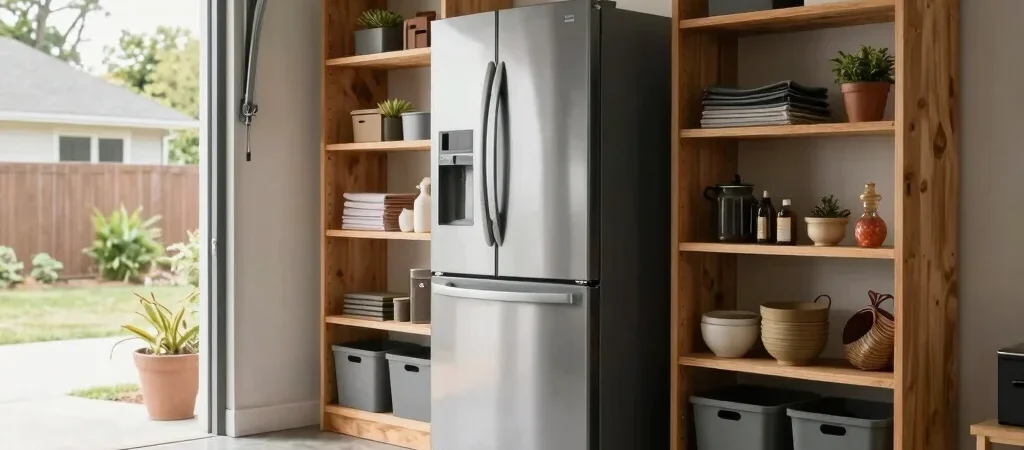
Relegating a fifteen-year-old kitchen refrigerator to the garage for extra beverage storage seems like a cost-effective convenience. In reality, unconditioned garage spaces force aging cooling compressors to run continuously during warm summer months. That extra storage often becomes one of the single largest energy drains in your entire home.
Heat and Humidity Acceleration
Standard refrigeration units are engineered to operate in climate-controlled indoor spaces between sixty-five and seventy-five degrees. When placed in an uninsulated garage where ambient summer temperatures exceed ninety degrees, the compressor struggles constantly to maintain internal freezing temperatures. This continuous high-draw cycle degrades internal components and doubles the unit's monthly power draw.
Comparing Modern Appliance Energy Profiles
Energy efficiency standards for residential appliances have improved dramatically over the past decade. A contemporary high-efficiency refrigerator uses up to forty percent less electricity than a model manufactured in the early two thousands. Transitioning to a dedicated garage-ready model or consolidating extra food storage can yield immediate dollar-for-dollar savings on your bill.
Simple Steps for a Home Power Audit
To determine whether your secondary fridge is worth keeping, plug it into a plug-in kilowatt monitor for seventy-two hours. Multiply the recorded kilowatt-hours by your local electric rate to calculate its exact monthly operating cost. Performing this simple home power audit gives you clear facts to decide whether to keep, repair, or recycle the appliance.


