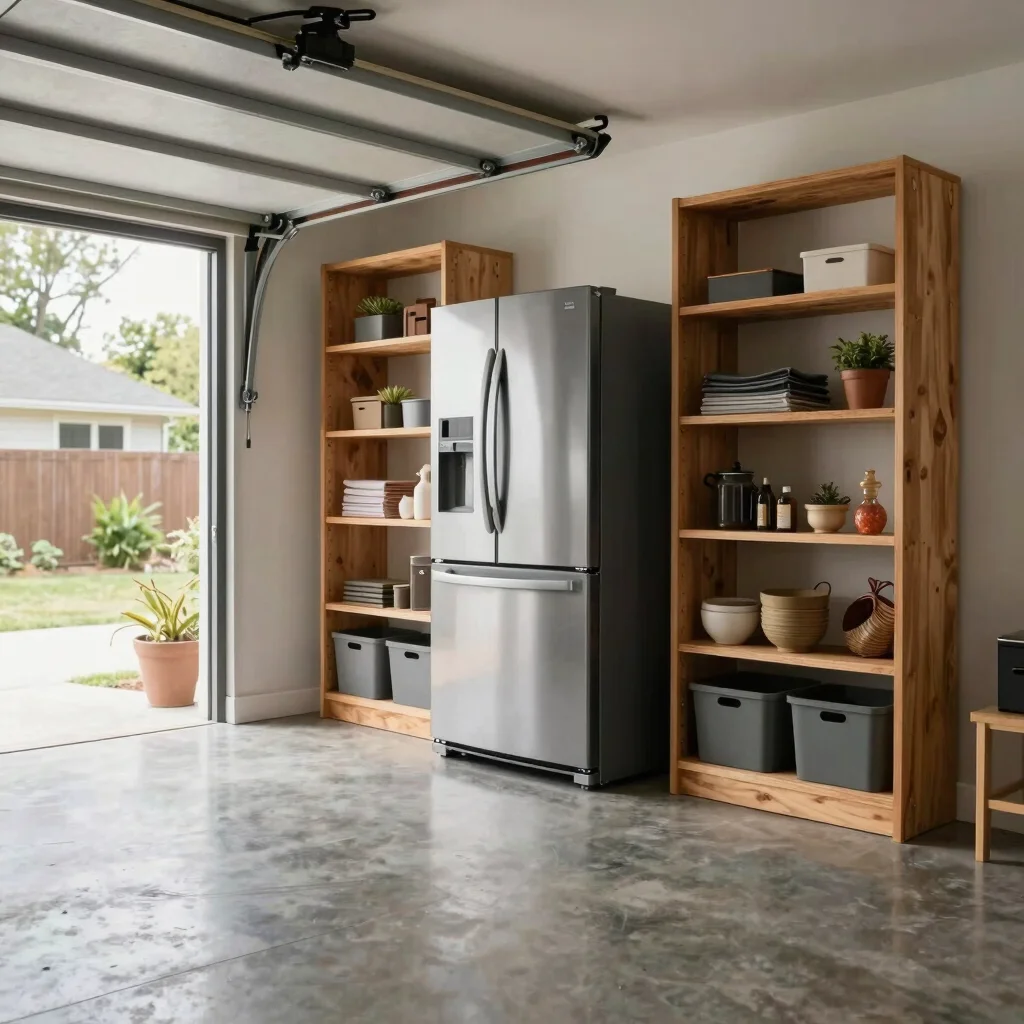
Quick answer: An older garage refrigerator can be worth measuring before you decide to keep or replace it. Age, condition, ambient temperature, door seals, ventilation and how often the door is opened all affect consumption. The most reliable way to estimate the cost of your specific extra fridge is to measure its kWh over several representative days and multiply that energy use by your electricity rate.
Why an extra garage refrigerator can matter
A second refrigerator is an additional appliance operating day and night. ENERGY STAR specifically advises consumers to consider replacing or recycling an old second refrigerator and notes that older refrigerators can use more energy than newer certified models. That does not mean every old refrigerator should immediately be replaced: the useful question is what your refrigerator consumes and whether the convenience is worth that operating cost.
Garage temperature can change the picture
A refrigerator has to move heat from inside the cabinet to the surrounding space. A hot garage can therefore make cooling more demanding. Very cold conditions can also be outside the operating range intended for some household refrigerators. Always check the manufacturer’s specified ambient-temperature range for your model rather than assuming any refrigerator is suitable for an unconditioned garage.
ENERGY STAR recommends placing refrigerators away from heat sources, allowing air circulation around the appliance, checking door seals and following the owner’s manual for maintenance and spacing. Those basics become particularly relevant when the refrigerator sits in a garage.
Do not estimate a refrigerator from rated watts × 24 hours
Refrigerators cycle. The compressor does not normally draw its full rated running power continuously for 24 hours, so multiplying nameplate watts by every hour of the day can badly distort the estimate. Use annual kWh from reliable model information or, better for an older appliance, measured energy use.
Our refrigerator running-cost guide explains why annual kWh is a better starting point for cycling appliances.
How to measure your garage refrigerator
- Use a plug-in electricity meter that is appropriate for the appliance and outlet.
- Measure for several days rather than a few minutes. A longer period captures more compressor cycling.
- Record the measured kWh and the length of the measurement period.
- Convert that reading to a daily or annual estimate only if the measurement period is reasonably representative.
- Multiply kWh by the electricity rate from your own bill.
Season matters. A reading taken during mild weather may not represent a hot summer garage, so avoid treating a short measurement as a precise annual forecast.
BoodBill Energy Tools
Refrigerator electricity cost
Enter the annual kWh on the EnergyGuide label, or measure a representative period.
Refrigerators cycle. Rated watts × 24 hours may significantly misrepresent consumption. Prefer EnergyGuide annual kWh or measured kWh.
How we calculated this
All periods use a 365.25-day year: 365.25 ÷ 7 weeks and 12 average months. Daily and weekly figures are averages, including days the appliance is not used.
Estimates cover electricity operating costs only. They do not model time-of-use pricing, demand charges, tiered rates, or changes in behavior and weather.
Private by design: calculations stay in this page. No account, storage, or external calculation service.
Check the simple problems before replacing it
- Door seals: damaged or loose seals allow cold air to escape.
- Airflow: follow the manufacturer’s clearance requirements and keep ventilation areas unobstructed.
- Heat exposure: keep the appliance away from avoidable heat sources and direct sun where practical.
- Temperature setting: use the manufacturer’s recommended setting rather than making the compartment colder than necessary.
- Maintenance: follow the owner’s manual for safe coil or condenser-area cleaning where applicable.
Keep, replace, or remove the second fridge?
Compare three things: the measured annual operating cost of the current fridge, the purchase cost and expected energy use of a replacement, and the value you actually get from having a second refrigerator. A newer efficient model can use less electricity, but buying a new appliance solely to chase a small annual saving may have a long payback.
If the extra refrigerator is rarely needed, consolidating food into the main refrigerator can avoid the second appliance’s operating cost altogether. If you do replace it, use the EnergyGuide information to compare models and recycle the old unit through an appropriate program rather than keeping it running by default.
Is the garage fridge causing a high electric bill?
It can contribute, but do not assume it explains a large bill increase without measuring it. HVAC, electric resistance heating, water heating, rate changes and other equipment can have a larger effect. Use our high electric bill checklist to investigate the whole home.
The bottom line
An old garage refrigerator should be a measured decision, not a guess. Measure its kWh, use your own electricity rate, consider seasonal garage conditions, and compare the annual operating cost with the value of keeping the appliance and the cost of alternatives.
Sources
- ENERGY STAR — Refrigerators (accessed October 6, 2026).
- Federal Trade Commission — How To Use the EnergyGuide Label To Shop for Home Appliances (accessed October 6, 2026).