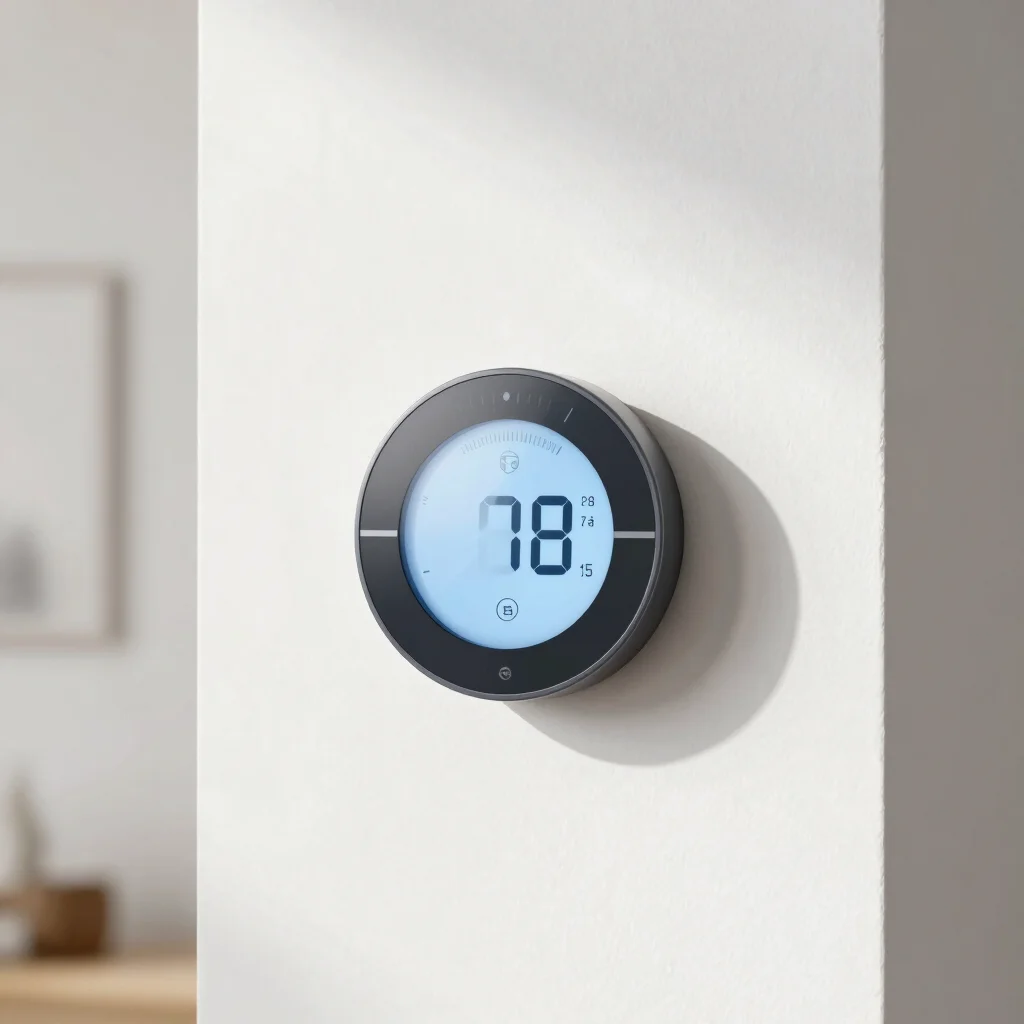
Quick answer: A smart thermostat can be worth it when it helps your household reduce unnecessary heating and cooling without sacrificing comfort. The biggest opportunity is usually in homes where temperatures can be set back while people are asleep or away. But the device is not a guaranteed payback: savings depend on your HVAC system, climate, schedule, existing thermostat habits, installation cost, and utility rates.
Smart thermostat vs standard thermostat: what actually changes?
A standard manual thermostat gives you direct temperature control. A programmable thermostat can follow a schedule if you configure it. A smart thermostat adds connected controls and may automate scheduling using occupancy, geofencing, learned preferences, or other features.
ENERGY STAR says certified smart thermostats are independently certified using aggregated real-world field data to demonstrate energy savings. Common features can include remote control, scheduling, geofencing, learning functions, HVAC-use information, and low-power standby operation.
Where the savings come from
The thermostat itself is not the major energy load. Its financial value comes from controlling heating and cooling equipment more efficiently. If your home is already managed with an effective schedule and sensible temperature setbacks, replacing a well-used programmable thermostat may produce a smaller incremental benefit than replacing a thermostat that keeps the home fully heated or cooled when nobody needs it.
This is why BoodBill does not treat a single advertised savings number as a guarantee. Two households with the same thermostat can get different results because HVAC runtime, weather, insulation, occupancy, temperature preferences and energy prices differ.
Compatibility matters before you buy
Check the thermostat manufacturer’s compatibility tool for your exact heating and cooling equipment before purchasing. ENERGY STAR notes that most smart thermostats need a consistent power source and many use a C-wire, although not having a C-wire does not automatically rule out a smart thermostat. Some systems may need an adapter or a different compatible control.
Compatibility deserves extra attention with high-efficiency or communicating HVAC systems, multi-stage equipment, heat pumps and systems that use auxiliary resistance heat. A thermostat that is inexpensive but poorly matched to the equipment is not a good upgrade.
How to judge the payback
Use a simple household-specific comparison rather than a marketing claim:
- Add the thermostat purchase price and any installation cost.
- Subtract a rebate only if you have confirmed that you qualify for it.
- Estimate how much HVAC runtime the new controls could realistically avoid compared with your current habits.
- Compare the expected annual savings with the net upgrade cost.
If you are trying to understand why HVAC is already driving a high bill, start with our high electric bill checklist. For cooling specifically, see how much electricity a central air conditioner uses.
Rebates can change the decision
Utilities and other programs may offer incentives for qualifying smart thermostats, but availability changes by location and over time. Check your utility and the current ENERGY STAR rebate finder before treating a rebate as part of the purchase economics.
When a smart thermostat is more likely to make sense
- Your home is regularly empty for predictable periods.
- You often forget to change temperature settings when leaving or sleeping.
- You want remote control or HVAC runtime information.
- Your current thermostat does not make scheduling practical.
- A verified rebate materially reduces the installed cost.
When the financial case may be weaker
- Someone is home most of the time and comfort settings rarely change.
- You already use a programmable thermostat effectively.
- Your HVAC system requires an expensive adapter, proprietary controller or professional installation.
- You are buying mainly for convenience rather than expecting measurable energy savings.
For a broader picture of the electricity consumed by cooling equipment, see how much electricity an air conditioner uses and window AC electricity use.
The bottom line
A smart thermostat is best viewed as an HVAC control tool, not an automatic bill-cutting device. It can reduce wasted heating and cooling when its automation improves on your current behavior. Check compatibility first, confirm any rebate, and judge the investment against your own schedule and HVAC use.
Sources
- ENERGY STAR — Smart Thermostats (accessed October 6, 2026).
- ENERGY STAR — Smart Thermostats Key Product Criteria (accessed October 6, 2026).